

Falls prevention technology for care homes
Stop Losing Care Time To Alarm Noise. Turn Falls Data Into Action.
One home can lose 304 hours a year responding to low-value alert noise. Altus connects fall detection with nurse call response so teams get insight, escalation and evidence, not just another alarm.
Resident safety expectations are rising. Falls prevention needs evidence, reporting and connected response data, not another disconnected device.
fall prevention connected to the care response workflow
Room-wide visibility
bed exits, chair exits and falls anywhere in the room
Insight, not alarm bells
before, during and after context for safer review
What makes it different
Recover up to 608 personal care sessions by reducing low-value alert noise.
Room-wide fall detection gives care teams meaningful event visibility. Altus makes that useful by connecting it to nurse call, response workflows, reporting and support, so the system helps the home improve rather than adding more noise.
Detect
Bed exit, chair exit and fall alerts give staff earlier visibility of risk.
- Witnessed and unwitnessed event context
- Before, during and after visibility
- Fewer blind spots in resident rooms
Respond
Alerts need to join the nurse call workflow, not sit in another disconnected app.
- Clear escalation routes
- Staff workflow alignment
- One accountable support partner
Improve
Video and event insight supports incident review, family confidence and safer care plans.
- Better review conversations
- Improved reporting visibility
- Resident-safety learning loop
Why Altus
Technology that fits how your home already responds.
Altus recommends and installs fall detection that suits the home, then connects it to nurse call, response workflows and reporting. One partner owns support after installation, so faults and questions do not fall between suppliers.
Falls prevention explained
Falls prevention technology questions care providers ask
Planning a project? Read our full guide: Falls prevention technology in care homes: a buyer’s guide.
| Approach | What it tells staff | Limits |
|---|---|---|
| Pressure mats and bed sensors | That a resident has stood on or left a mat | Small coverage area, trip risk and frequent false alarms |
| Routine night checks | What staff see at the moment of the check | Disturb sleep and miss what happens between checks |
| Room-wide fall detection sensors | Bed and chair exits and falls anywhere in the room, with context | Needs clear privacy policy, consent and staff routines to act on alerts |
| Falls data review and training | Patterns by resident, time and place, and what staff should change | Only works if leaders review the data and teams are supported to act |
What is falls prevention technology in a care home?
Falls prevention technology uses sensors to alert staff when a resident at risk gets out of bed or a chair, or when a fall happens. Better systems cover the whole room and give context about what happened, so staff can respond quickly and review incidents properly.
Are pressure mats still the right choice?
Pressure mats are cheap and familiar, but they only cover a small area, can be a trip hazard and often trigger false alarms. Staff can learn to distrust them. Room-wide sensors reduce blind spots, but any technology still needs clear routines for who responds and how alerts are reviewed.
How do care homes reduce unwitnessed falls?
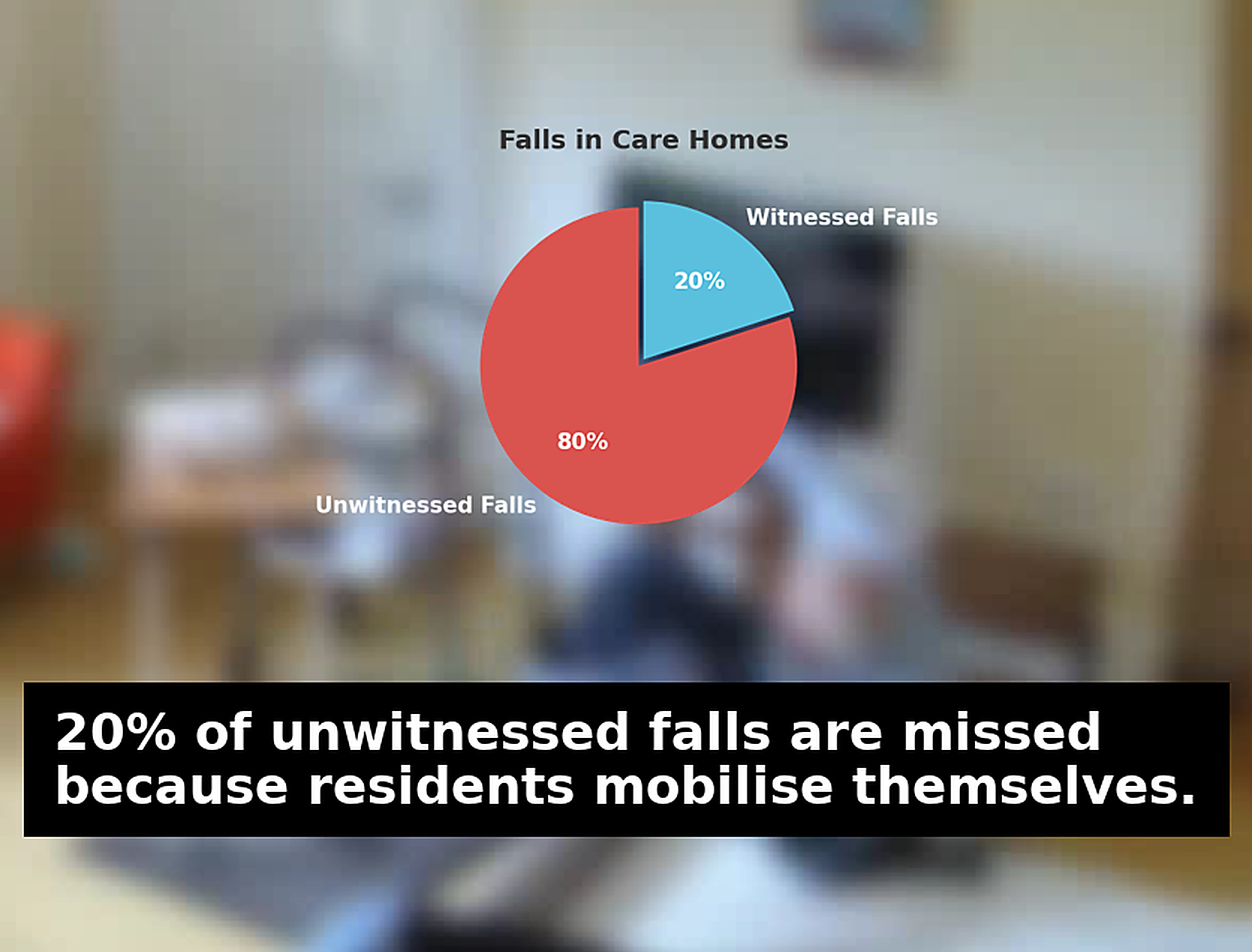
Unwitnessed falls usually happen at night, in bedrooms and bathrooms, when a resident tries to move without help. Earlier alerts on bed and chair exits, a review of falls data by time and place, and targeted changes to routines and care plans all help staff get there before harm.
Is falls detection with sensors compatible with resident privacy?
It can be, with the right design and governance. Look for systems that alert without recording by default, agree a privacy policy, record consent or best-interest decisions for each resident, and control who can view any footage. Families should understand what is in place and why.
Does technology alone reduce falls?
No. Technology makes risk visible, but falls come down when staff understand the data, feel involved in how it is used and change routines as a result. Pairing a system with falls training and regular data review is what turns alerts into fewer incidents.
What should a falls prevention review cover?
A useful review looks at a baseline of falls and near misses, when and where they happen, current equipment, staff routines and how nurse call and care records fit together. It should end with a written plan showing whether technology, training or both are the right next step.
Recover capacity, reduce spend, improve outcomes
Make falls prevention part of a measurable resident safety model.
Altus reviews your systems, suppliers, contracts, support routes, reporting gaps, cyber risk and AI readiness, then shows where to recover staff capacity, reduce spend, improve service levels and strengthen resident safety. Resident-safety systems and operational evidence.
Commissioning a wider service? Read how to commission a falls prevention service.